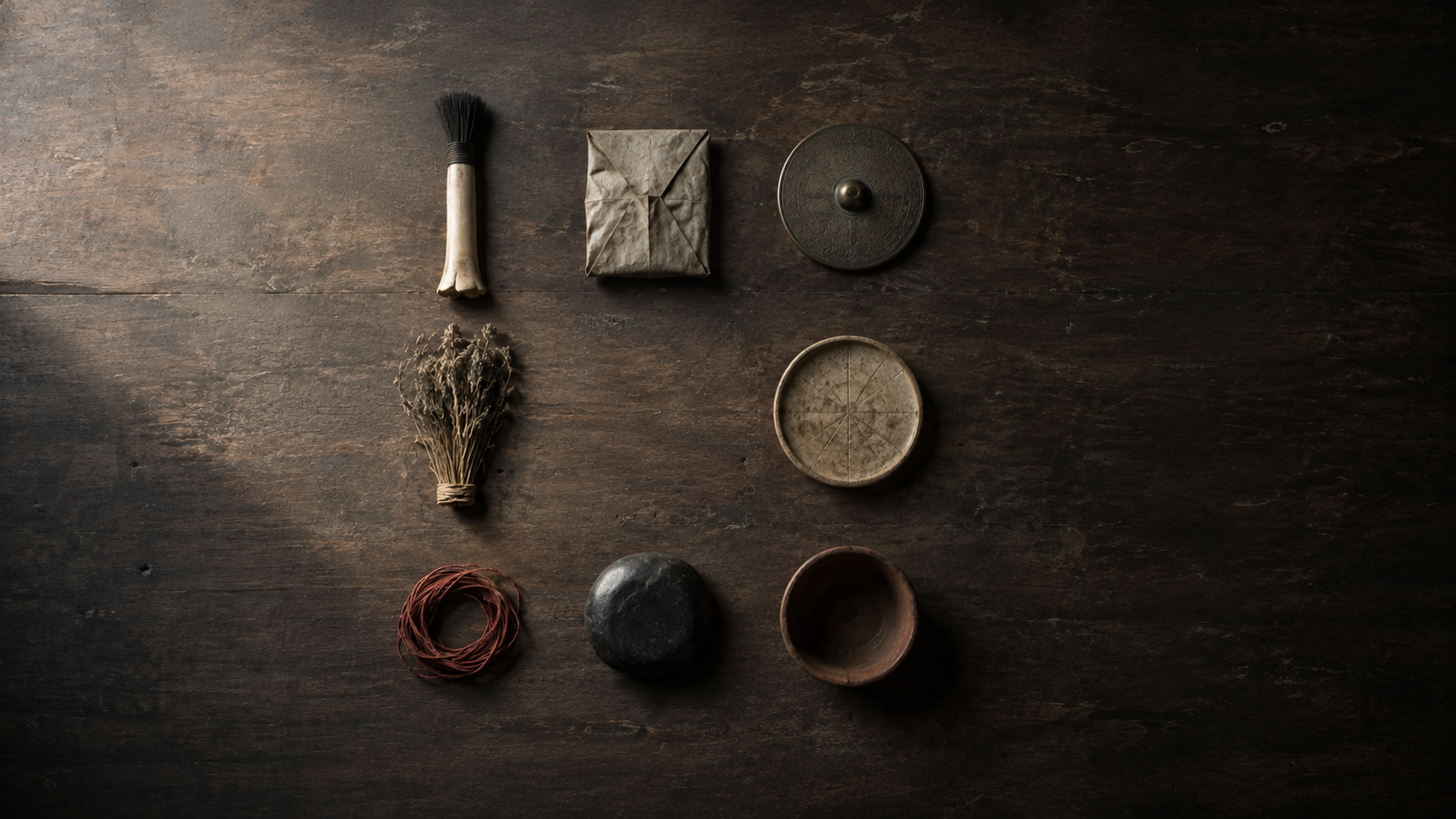
Your Clinic Runs Eight of Nine
Nine things a magician does. Your clinic does eight of them, today, and nobody told you which eight. Where each one lives in Chinese medicine, and the two places I get careful.
Nine things a magician does. Your clinic does eight of them, today, and nobody told you which eight. Where each one lives in Chinese medicine, and the two places I get careful.
Nine things a magician does. Your clinic does eight of them, today, and nobody told you which eight. Here's the list, where each one lives in this medicine, and the two places I get careful.
From The Magick That Never Left: Classical Chinese Medicine and the Tradition Still Beneath It
~24 minute read, plus a reading list
Last time I said the policy your curriculum came out of is about seventy-five years old, and that the textbooks are younger than that, and I ended on Yu Yunxiu, honestly, the man who wanted this medicine abolished in 1929 and who was right about what it is. He called it a cosmology. I agree with him. Where we part is what follows from that. If you haven't read it, it's here, and this piece stands on it.
Right. So I've been using the word since the first page of this book, and I owe you a definition. And the k first, since you've been looking at it. That spelling is Crowley's, and I keep it for one reason, which is that it marks the operational sense, the old craft of doing things, of doing them, and it holds that apart from stage magic. Because if I don't pin the word down, I can make it mean anything, right?
Do I mean stage tricks? No. Same answer for wishing. And I don't mean "spooky," which is the definition most of you are carrying around, and it does no work at all.
I'm also not the first person to do this, not the first to put this word next to this medicine. Michel Strickmann's Chinese Magical Medicine came out from Stanford in 2002, edited by Bernard Faure, after Strickmann's death. It works the Daoist and Buddhist canonical material as medicine, as medicine and not as embarrassment, right? Which is the only reason any of it is available to me at all. So here's where I part company with him. Direction of travel. He's writing history, and I'm going to argue the thing is still running.
Definitions of magic are a swamp, and everybody who walks in there drowns, right? People have been fighting over the word since James Frazer's The Golden Bough in 1890, call it a hundred and thirty-odd years, and if I plant a flag in that swamp, then the whole book you're holding, the whole book, it becomes an argument about my flag, and not about the medicine. So a list instead. Nine operations, and I'll show you where each one lives in this medicine.
And before you take a single item off me, here's where I'm standing, because it shapes the whole list and not just the parts I'll admit to. I'm a chaos magician. I trained under Andrieh Vitimus, who wrote Hands-On Chaos Magic, and that's the room I learned to think about all of this in. So I'm taking a chaos magic point of view and running Chinese medicine through it, right? The categories aren't mine, they're Carroll's and Vitimus's and Frazer's, and the itemised bill is at the foot of this chapter with my two changes to Carroll. Go check it after. What's mine is the history and the context. Where each one lives in this medicine, what it's called there, when it arrives, when the state licensed it, and when it came off the syllabus.
Nine is a lot to hold at once. So how do you keep them straight? Four families. Four questions, really, and the medicine answers all of them. What can you read off a sign, what answers what, what do you have to become, what can you send out, or, you know, call in. The ninth sits outside the four, because it's the lens I carried in, carried in with me, rather than anything I found here, and I'm not going to hide it in a family.
Divination. Getting information. That's the job, that's the whole of it, right, and everything else is method. Information you had no other way to get at, off a sign that has no business carrying it.
And I need one test here or the whole item goes soft, so here it is. Can you walk the line from the sign back to the answer? Think of it as a chain, and every link has to be there. A thermometer says 39 because heat makes the liquid climb, and you can walk that, the whole way, no gaps. A radiologist looks at a shadow on a film and reasons back to the sort of thing that throws a shadow like that. Both of those are sign-reading and neither one is divination. In both of them there's a line, right, and you can walk it. Divination is where the sign works fine and there's no line to walk at all.
So hold the medicine up against that. The five periods and six qi (五運六氣) gets seven of the longest chapters in the Su Wen, and what it does is forecast. This kind of year, so this is what'll go wrong in people, and roughly when, right? And it isn't read off the sky, or off any patient in front of you, it's read off the date. Then Zi Wu Liu Zhu picks which point you needle by the hour, off the stems and branches, the old sixty-unit clock the Chinese calendar keeps. Point's open now and shut in two hours. And plenty changed in the body in those two hours, cortisol, temperature, all of it, and none of it is what decided, right? Nobody measured any of it. The hour changed. Same machinery a diviner uses to pick a wedding day, right? And bazi is that apparatus turned on a person, four pairs off the calendar for the year, month, day and hour of a birth. It reaches practitioners through teachers rather than through any programme, right? And yes, I use it, now and then, at the reading table. Not in the treatment room. No diagnosis, no chart, no bill, and no part of any assessment I do under my licence, which stands on tongue, pulse, history and exam.
And pulse and tongue belong in here, respectable as they look. Reading a surface for what it discloses is 相 xiàng, and take that character apart, because it hands you the argument. An eye, 目 mù, next to a tree, 木 mù, glossed 省視 in the Shuowen, to inspect closely. Somebody standing there looking hard at a thing. That's the word in 相馬 xiàngmǎ, sizing up a horse before you buy it. In 相地 xiàngdì, sizing up ground before you build on it. And in 面相 miànxiàng and 手相 shǒuxiàng, face reading and palm reading, basically, the same verb every time. One craft, one name, and the name just means look, right? Now the pulse isn't 相. It's 脈象 màixiàng, and that 象 xiàng is a different word, an elephant in the Shuowen, and I'm not building you a bridge that isn't there.
So what joins them? The graph doesn't. The Han Feizi has a line about people who never see a living elephant, so they get the bones of a dead one and 想其生, picture it alive, you know, and that's how 象 comes to mean image. Bones on the table, animal in your head. The reading list has the whole passage. What joins them is the operation, and that's the only bridge I'm building.
And look at what that operation actually does, because this is the part that decides it. The sign is physical every single time. A face is physical, a palm is physical, a wrist is physical. Right. And what comes back through it isn't. What comes back through it isn't. Nobody reads a face and gets a face back, right? You get the person, and the life. And there is no line running from the shape of a jaw to a marriage, you can't walk that one, there's nothing there to walk. Now the wrist, and you'll tell me the wrist is different, because there's a physiology story behind it. So try to walk it. The vessel's under your fingers and it's tense, and physiology gets you that far and then stops. Now walk me from a tense vessel to Liver qi stagnation. Liver there isn't the organ under your ribs, it's a category, a category with wind and anger and the sinews and the colour green already inside it, and no line runs from a tense vessel to a colour. Physiology hands you the tension. The correspondence table does the reading, right. That's what puts it on this list. The hour is open or it isn't, and there's no walking your way to that either.
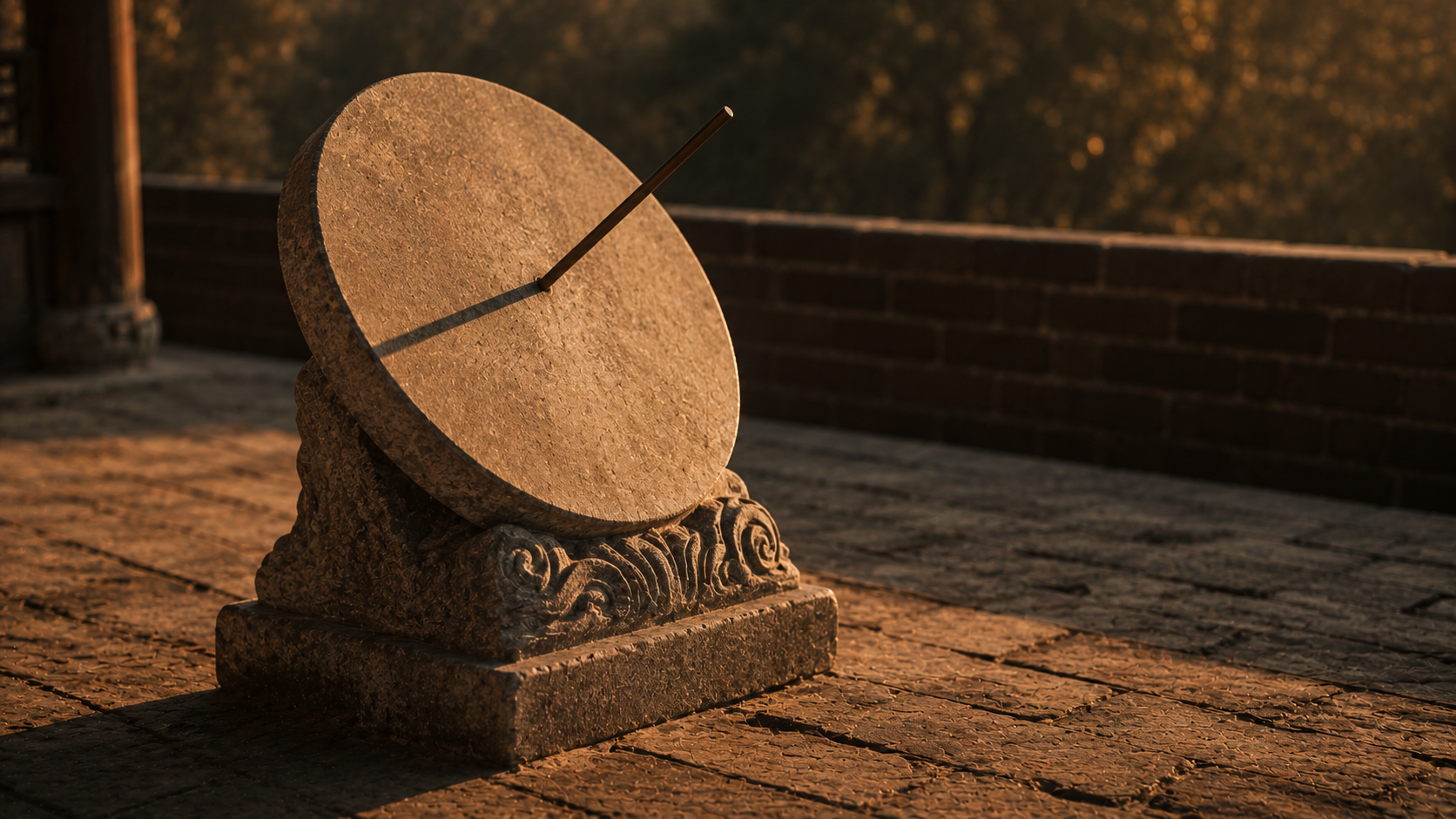
Sympathetic magic. Frazer cut it in two. Similarity, like affecting like. And contagion, things once in contact staying in contact after you pull them apart. This medicine runs both.
Contagion first. Sun Simiao, seventh century, on swaddling a newborn. Wrap a boy in his father's worn clothes, a girl in her mother's. Never new silk. The Arcane Essentials (外臺秘要) says what it's for a century later. It makes the child long-lived (令兒長夀). Now, you can tell me old cloth is softer than new. It is. Soft doesn't tell you why it has to be the father's for a boy, right? Nobody's being appeased, nothing resembles anything, and there's no spirit in the room. Just cloth that was on a person, still carrying the person.
And that premise never went anywhere. On the qigong side of what I do, right now, this year, a practitioner finishes with somebody and goes and washes their hands. Shakes the arms out. Rinses to the elbow, salt in the water sometimes. So ask one of them why. You'll get, it's still on me. And you go, what's still on you. And you get, hers. The client's. Said the way you'd say why you lock your car. Two people were in contact, they aren't any more, and something is still moving between them, right? Is anybody in that room thinking about germs? Nobody is. Thirteen hundred years between those two, and the last stop is a sink. Same way you'd wipe your feet on the way in, except the doormat is a theory.
Now the similarity side, and this is the one you use all day. The five phases and the whole correspondence table. Sour enters the liver, bitter the heart, salty the kidney. The five flavours and where each one enters (五味所入), and that's in the Su Wen. A flavour reaching an organ with nothing travelling between them, right? Or the heavy minerals, magnetite (磁石), dragon bone (龍骨), pearl (珍珠), given to settle a spirit that won't sit still. Heavy things sink, and a spirit that won't settle wants weight. Right. That's the whole reasoning, and it's the same logic as a paperweight. This is your engine, and chapter five is where I show it running.
Talismanic work. Writing something down so the writing does the work. And you'll want to make it a note about the thing, right? It isn't. It's the thing itself, in ink, the same way a cheque isn't a photograph of money.
And you already met one, in the opening scene of the first chapter. The ginseng on that altar is a talisman, and I told you what it was for and never told you what kind of operation it was. This is the kind.
How old is this one? The word is talisman (符 fú), and the graph is a tally: a token split in two so the halves prove each other when you bring them back together. That isn't decoration, that's the mechanism. Drawn, worn, posted, burned. Talisman water (符水), where you burn the paper and drink the ash, so a written command goes into a body. Sun Simiao wrote the talisman sections of the Book of Interdiction (禁經) in the Supplement to the Formulas Worth a Thousand in Gold (千金翼方). Cinnabar on peach wood, writing on plain silk, the ghost graph drawn on the ground. Same author as the formulary, same shelf. The spirit-summoning is in that book too, and it's a different operation, so I'm citing different pages for it. And it didn't stop when the state stopped licensing it. Junqueira has a study of the market for printed healing talismans in the early twentieth century, sold at stalls, actually, in the same decades Yu Yunxiu was drafting his motion. One half of the profession proving it had no such thing, the other half buying it.
So is this just sympathetic magic with a pen? Not quite, no. Correspondence needs the two things to already share a category. A talisman doesn't wait for that, right? You write the instruction, and the writing is what holds the intention. That's the operation, and that's why I gave it its own line.
How it travels afterwards is a separate question, and it's open. It can stand on the writing alone. It can be handed to a spirit to carry. It can ride the correspondences and get boosted by them, peach wood because it's peach wood, an hour picked because of what that hour is, the material and the timing working under the ink. Same cheque, more than one way for it to clear.
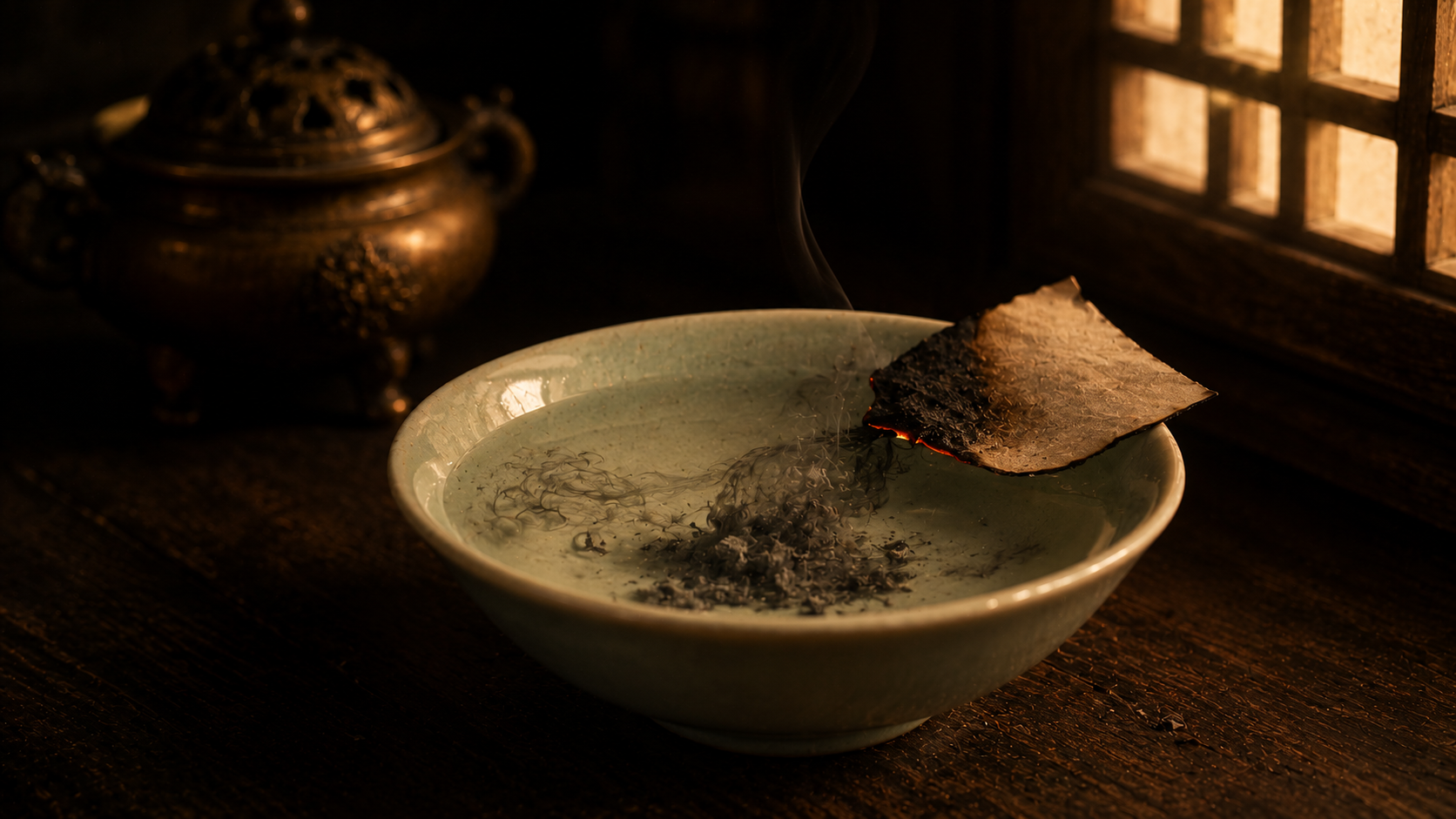
Energy work. Something in your body that can be built, moved, depleted and directed. And an operator who conditions himself to do it. That's the slot Mauss's mana occupies, and qi sits in it. It doesn't fit perfectly, and I'm not going to paper over it. Mana is impersonal and qi isn't always. Now the receipt, and it's older than the Su Wen. A twelve-faceted jade cylinder from about 380 BCE, forty-five graphs on it, sitting in the Tianjin Museum: circulate the qi (行氣), breathe deep so the volume is great, and when the volume is great the qi expands. Michael Stanley-Baker calls it the earliest surviving document that describes circulating qi in a body. And if you want to fight about the date on the jade, the Mawangdui manuscripts went into the ground in 168 BCE with Eliminating Grain and Eating Qi (卻穀食氣), telling you which named qi to swallow by season and hour, and Drawings of Guiding and Pulling (導引圖), with forty-four people painted doing the exercises. That's the item: something you train, move and direct. Then the canon puts your own state first among the things a needler must have, ahead of knowing your drugs and ahead of knowing how to read your patient. Su Wen 25, Discourse on Treasuring Life and Preserving Physical Appearance (寶命全形論). 凡刺之真,必先治神. For needling to be real, first govern the spirit.
Gnosis. The state you have to be in for any of the rest of it to land. Every other item is a thing you do. This one is the condition you do it from, and if it's absent the operation is just choreography, right?
And the canon prescribes it in detail, which is the part that surprised me. Su Wen 25 doesn't tell the needler to concentrate. It says stand as if over a deep abyss, hold your hand as if you were holding a tiger, and keep the spirit, honestly, from scattering out among the ten thousand things. Focus doesn't need a tiger in it, right? So that's a described state, and somebody who'd been in it wrote it down.
The deep end of the same axis belongs to the neighbours, not the needle. Visualization practice (存思), where a Daoist adept holds interior figures until they're present. The spirit-medium (巫 wū), in ecstatic state. Those go further than the acupuncture canon asks, and chapter six gives the flat reading of Su Wen 25 its due before I argue with it.
So how is this not illumination? Different clock. Think of it as the difference between training for a decade and warming up in the tunnel. So which one is which? Illumination is the twenty years that change who's holding the needle. Gnosis is the four seconds before it goes in. And you've met this one already, whether or not you had a word for it. You've had the day where the room came in sharp and your hands knew things, and the day where you were somewhere else and it showed.
Illumination. The one where you're the material. Every other item points outward, at a patient, a year, a thing you want gone, right? This one points at the operator, and the work is that you come out different.
So here's the receipt. Sun Simiao's Essential Formulas Worth a Thousand in Gold (千金要方) is the formulary the whole prescription tradition rests on, thousands of formulas, and what does juan one open with? Not drugs. On what a physician has to study (大醫習業), and then on the absolute sincerity of a great physician (大醫精誠). Two chapters on who you have to become, sitting in front of the medicine, in the most practical book in the tradition.
How long does this one take? The long version is nourishing life (養生), and internal alchemy (內丹), and those are lifetimes. The daily version you can start this week. Sit with your own state before you walk into the room. Notice what you brought in. Write the day down and read it back a month later, because you won't remember what you did, you'll remember the version where you were reasonable. That's journaling, right? Nothing mystical in it, and it's the same operation as the alchemy, at the near end of the same road.
And this is the item your curriculum cut hardest. Not by dropping it. By demoting it. Qigong went from daily cultivation to a course you pass, and a course you pass is just a technique, right? That's the car with no gas from the first chapter, right?
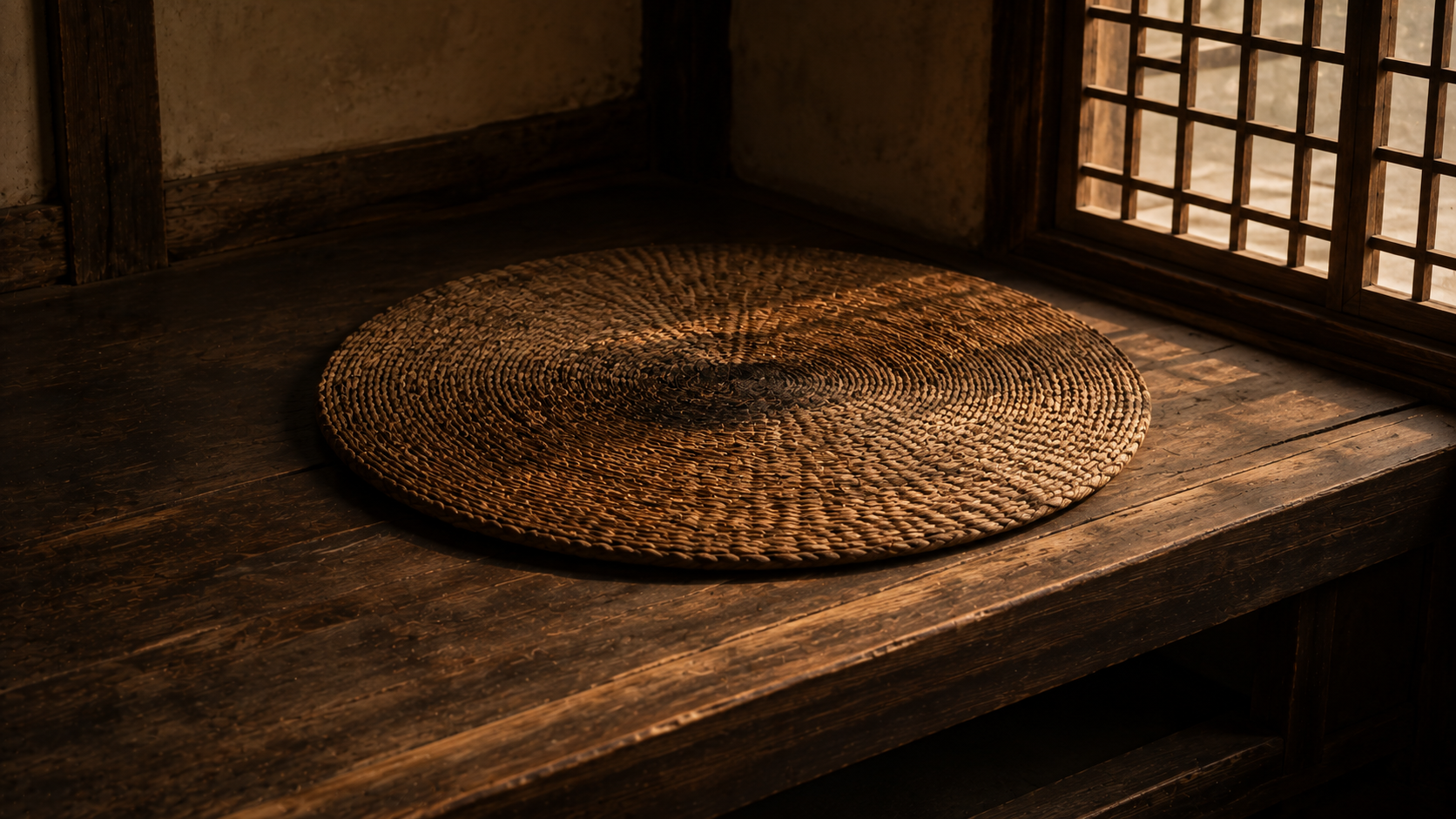
Banishing. Driving a thing out. Not fixing a person, evicting an occupant. Same way a landlord isn't renovating, he's changing the locks. And it has two halves that always travel together. You get the thing out, and you put the place back in order. What does that look like? Exorcism is the loud version. Cleansing is the quiet one. Centering too, that's the same move when the place you're clearing is you.
So look at how this medicine actually treats. Not the theory, the treatment. Sweat it out (汗). Vomit it out (吐). Purge it down (下). Right. Three doors, and the whole business is getting something to leave. Think of it as plumbing, right, where the only real question is which way is out. That isn't my reading either, it's a named current: attacking evil (攻邪), which English writing calls the school of purgation. Its central figure is Zhang Congzheng (張從正), c. 1156 to 1228, and his Confucians Serve Their Parents (《儒門事親》) has never been translated whole, so these are my renderings.
夫病之一物,非人身素有之也。或自外而入,或由内而生,皆邪氣也. Disease is not a thing the body owns. It comes in from outside or it breeds within, and either way it's evil qi (邪氣). So it goes. Notice he doesn't care which door it came through, right? Native or foreign, it isn't yours.
And here's the half people miss. 邪去而元氣自復. Once the evil is gone, the original qi restores itself. So clearing and settling aren't two procedures, they're one, and you don't build the good thing because it was never gone, it was only crowded. Thirteenth century, right, and that's the whole logic of a cleansing.
And it isn't only bodies. The texts talk about driving out a mood the same way they talk about draining damp, and the vocabulary runs straight past the tendon, straight past it, into the thought that's been running the place for a month. Now I'm telling you what the frame covers, and not what it delivers. And a thought that's been running the place for a month, that isn't a treatment plan, it's a referral, and it sits outside what I'm registered to assess anyway.
So what separates driving out a demon from draining damp? Not the shape of the move, because the shape is the same. What changed is what the move asks of the person making it. Getting an occupant to leave asks you to be somebody an occupant would leave for. Draining damp asks you to have passed the course. And you're still doing it, every time you say release, drain, dispel, expel, clear the heat, open the surface. You learned the vocabulary without anybody telling you what family it came from, right?
Evocation and invocation. Spirits. Called out and commanded, or called in and carried. Incantation therapy (祝由 zhùyóu), staffed as a state department for about a thousand years. Sun Simiao wrote the spell manual, seventh century, and chapter four goes through it.
And the Thirteen Ghost Points are the part I'd have you sit with. Thirteen points, each one named for a ghost, needled in sequence to drive the thing out and get the person back. They first show up in Sun Simiao's Essential Formulas Worth a Thousand in Gold for Every Emergency (備急千金要方) of 652, juan fourteen, in the wind-epilepsy chapter, and Sun doesn't claim them. He hands them on: Bian Que said (扁鵲曰), for the hundred evils that cause illness there are thirteen points for needling, and you begin from Ghost Palace (鬼宮), then Ghost Message (鬼信), then Ghost Fortress (鬼壘). The collective name Thirteen Ghost Points (十三鬼穴) and the attribution to Sun himself are Ming, and the reading list has who did that and when. They're on the body you have right now, right, and you learned some of them under other names. They get chapter seven to themselves.
Belief as a tool. Taking up a way of seeing on purpose, because of what it lets you do, and not because you've concluded it's true. Like picking an operating system for the job in front of you. Are you marrying it? No. You put it down when the job's done.
That's the chaos magic position, and it's the lens I'm reading the other eight through. Those eight are in the Chinese material. This one isn't, and it earns its keep later, because it explains something the other eight can't.
That's the list. Now the mechanism underneath all of it, because they all run on one idea and it isn't mine. So how does a Han writer explain one thing moving another? The Huainanzi, second century BCE, reaches for two tuned instruments. Play the gong string over here and the gong string over there sounds. Pluck jue and the other jue moves. 此同聲相和者也. Same tones answering each other. Now, sound crosses the room, and the Han writer isn't pretending otherwise. Watch what they do with it. The question isn't what travels. The question is why that string and not the one beside it, and the answer is that they're the same tone. Same kind answers same kind. The category does the selecting, and that's ganying (感應), resonance, and the Han world runs on it.
Now test that on something you actually do. Somebody grinds their teeth, wakes at two in the morning, and the sides of their tongue are red. You treat Liver. So what's your first answer? The channel, probably. There's a conduit running from here to there and something moves along it. Fine. That's transport, and transport isn't magic.
Right. Right. But no conduit runs from two in the morning to the side of a tongue. Liver, wood, spring, green, wind, anger, sour, the eyes, the sinews. Nothing runs from a season to a sinew. No conduit joins a colour to an emotion. They answer because they're the same kind, right? And that answering is what picks the channel before the channel carries a thing. So the correspondence chooses and the conduit delivers, right? Pull the correspondence out and you've got plumbing with no reason to run one pipe over another, right?
So nobody smuggled sympathetic magic into this medicine. Every clinic in the country is standing on it. So are you, if you needle for a living.
So that's eight of the nine, all eight in the tradition, and the ninth is the lens I carried in. Now count what the 1950s syllabus hands you, family by family. What you can read off a sign: kept, and kept whole, because pulse and tongue are on every syllabus. What went is the frame that told you what kind of reading that is, plus the calendrical end, which survives only where somebody still teaches the great treatises. What answers what: the correspondence table whole, and the talismans gone. What you have to become: energy work as an elective, gnosis under a name that hides it, illumination demoted from a practice to a course you pass. What goes out and what gets called in: the banishing kept, the move intact, and nothing left in the syllabus that tells you what the move used to ask of you. The spirit work gone entirely. So the operations are still in the medicine. What walked out of your curriculum is what they used to ask of you. The move is intact, right? The demand on the operator is the part that got dropped.
So here's the bill, and I said I'd itemise it. Chaos magic is the strand that dropped the robes, dropped the lineage claims, kept the operations, right? And it treats a belief as a tool you pick up for a job. That's the room I learned to think about all of this in. Eight of the nine come out of chaos magic, Peter Carroll's Liber Null & Psychonaut and Andrieh Vitimus's Hands-On Chaos Magic. And watch the arithmetic there, because it's a different eight from the one I'll be claiming for China. That eight includes belief-as-a-tool, which isn't Chinese, and leaves out sympathetic magic, which is. Where they're printed: sympathetic magic is Frazer's, gnosis and the sigil work are Carroll's out of Spare, and Mauss is where I got mana. Where I got them is a different question with one answer. Andrieh Vitimus is my sifu (师父), so treat me as an interested party. I won't itemise him. He taught me the whole of it, and his book carries that and more. It's the one I'd put in your hands first. Frazer and Carroll are the paper trail. Vitimus is the transmission for me. And I've made two changes to Carroll that you should know about. I've collapsed evocation and invocation into one line, because it's one operation, one operation pointed two ways, and I've dropped his enchantment, because everything it covers is already sitting under sympathetic magic and talismans. Four sources, two traditions that never spoke to each other, and not one of them built for China. Which is the point, right? I didn't draw them to fit the answer.
And the reason the taxonomy travels at all is that it counts operations. What is a person actually doing? Not what they believe, not who they pray to, not whether a scholar will licence the word. Belief drifts, and operations hold still long enough to count, right? It's the same way you'd identify a bird by what it does with its wings, and not by what it thinks it is.
And the question I'd hold me to isn't where the lens came from. Every lens came from somewhere. It's whether it picks out anything real in the material once you look. And the only question that matters to you isn't a definitional one either. How many of these are in the medicine you practise?
And is the list rigged? Fair thing to ask, of somebody who already knows what he wants it to catch. Two answers. First, I didn't build it. Go read Carroll and Frazer and check my bill. Second, run biomedicine through it and score it honestly, which means giving it every item it can take. Belief taken up as a tool, yes, in the corners where somebody works a patient's expectation on purpose. The doctor's own person as part of the treatment, yes, that's Balint's whole argument, and Balint is in my reading list. Banishing, yes, because antibiotics, debridement, resection are all getting an occupant out, and I said the item is identified by the move. Energy work, no. Divination, no, and this is where the walk-the-line test earns its keep, because a radiologist can walk you from the shadow to the thing that threw it and a stem-and-branch table can't. Correspondence, no. Talismans, no. Spirits, no.
So call it three of nine, maybe four on a generous day. Good. That's the point, right? These are ordinary operations that practitioners run, and the question was never whether anybody scores, it's how many and which ones. Three is a normal number. Eight is a system.
Can I give you the years on them? I can, and that's the next chapter. And I'm not going to argue the word with you yet, because four chapters of receipts come first, and a definition argued before you've seen the evidence, honestly, is just a definition argued. The chapter that does nothing but fight about the word comes later, with the anthropologists, with Sivin, and, look, with the strongest objection anybody has ever put to me.
And I'll say where I stand on all eight, on the record. I do every one of them. Correspondence, energy work, gnosis, banishing, talismans, illumination, divination. Plus the spirit work, the spirit work as a spirit-medium (巫 wū), and as a transmission priest, which chapter seven stops being careful about entirely. I run bazi as well, so I'm not standing outside any of it throwing rocks.
Careful one. Astrology read as fate. And this is the one thing on the list I won't do at all. Because what does a chart do to a person, read that way? It hands them a fence and calls the fence a self. You're a strong wood day master. You're a Scorpio. And now there's a shape you're meant to fit, and the shape came out of a book.
And nobody agrees on the books, right? Bazi reads you one way, Zi Wei another, Western astrology draws a different animal, Vedic moves your sign before it starts. Same person, same birth minute, four verdicts. So which fence are you signing?
Now hold that against what this medicine says a person is. The same qi as everything outside them, on the same cycles, the whole universe running inside one body. That's the oldest idea in the canon. You don't get to take that and hand somebody a type.
So a chart is weather, not a verdict, and that word cuts three ways. The sky is real and it isn't listening to you. Space doesn't care what's going on in your kitchen. So a chart telling you what's coming is telling you something true. Down here you have moves; storm coming, so you dress for it and don't go out on the water Tuesday, and nobody calls that fatalism. And third, the one I work in. Bad stretch on the chart, so you do the qigong. You run a ritual. You work with a spirit. You change your own state, and that's the premise the whole tradition runs on. I want it read as a premise, a premise and not a promise, because I can't show you it moves anything. What I can say is that a chart read as a sentence takes the choice off the table before you've looked.
Same as a pulse. Nobody takes a wiry pulse and goes, well, that's you now, have a good one. Chapter five is where I take that apart.
Careful two. Which of the eight are in the room, and which are behind a wall. Because the title of this chapter says your clinic runs eight of nine, and I'd better be straight about which eight I mean, right?
Five of them are the clinical act and can't be pulled out of it. The correspondence work, the banishing, the energy work, the gnosis and the illumination. They're in the reasoning behind the point you choose and the state you're in when you choose it. They're in the vocabulary you were taught, right, and there's no version of licensed acupuncture with them removed. That's the whole argument, and if it's right you've been running them since your first student clinic.
And divination splits, and I have to split it or I'm misleading you. The pulse-and-tongue end is the clinical act. It's in every assessment I do and every chart I write, and calling it divination is an argument about what kind of reading it is, not a confession about what I bill. The reading-table end, bazi and the calendrical work, doesn't go near a patient.
So three of them don't come near a patient of mine. The reading-table divination, the talismans, the spirit work. What my patients consent to is acupuncture, and that's what they get and all they get. None of those three enters an assessment, a treatment or a chart. No patient of mine is offered any of it, and no patient of mine is accepted for it either, so somebody who comes to me for needles and wants a reading gets sent to somebody else. Different door, and the door stays shut in both directions.
So if you want the number that survives my own honesty, right, your clinic runs five and a half, and the tradition holds eight. I kept the title because the eight are all in the medicine, and that's the claim I'm making. What your licence lets you do with them is a smaller number, and I'd sooner print both.
Now the part that makes it checkable. Every one of those eight has a date, and two of them had a state licence, an actual seat with staff and a budget, and I can tell you the year that licence ended.
Next: Chinese Medicine Lost Its Licence in 1571. Subscribe and you'll get it when it drops.
The Secret Menu Index. One page. Everything the standardized curriculum dropped, renamed, or de-framed, and where each piece went. Free, by email. Get it here.
The Secret Menu. The paid tier of this book, and later the classes. The free side argues that this medicine is magick. The paid side is where I stop arguing about it and start teaching the spiritual practice on its own terms. Ritual, cultivation and correspondence work. Strickmann reconstructed what the operators did from the texts. This goes the other direction, from somebody doing it. It's open, $45 a month, Canadian. That's the founding rate, and it closes when the first class ships. It goes up for people who come after that, and it never goes up for you while you stay in. Cancel and it's gone, and you'd come back at whatever the price is then. So the rate is for members, not for names on a list.
What it is and isn't. It teaches ritual, cultivation and correspondence practice as spiritual and educational work. It is not a clinical course, it does not teach acupuncture or TCM diagnosis, nothing in it is offered as treating, diagnosing or curing any condition in you or anyone else, nothing in it is presented as making any regulated treatment more effective, and finishing it confers no competency to treat. It is not open to my acupuncture patients, and subscribing creates no practitioner-patient relationship of any kind.
This is a personal essay on the history and philosophy of Chinese medicine and my own practice, not medical advice. Every person described in this book is a composite drawn from several sources, with identifying details altered or invented, and no scene is a record of an actual patient or session. When I argue that this medicine is a magical system, that's a claim about how a historical system of reasoning works, not a claim that any treatment produces any effect.
Who I am, what the credentials are and aren't, how I handle the Chinese, and the full scope note. About This Book. It's one page, and it dates my own lineage, the same way this chapter dates everybody else's.
I'm not a historian, and I'm not a translator. The classical readings here lean on the scholarly translations below, and practitioners from other streams will read some of these passages differently.
Zachary Lui, R.Ac. Registered Acupuncturist, College of Traditional Chinese Medicine Practitioners and Acupuncturists of Ontario. The reading-table divination, the talismanic work, the spirit work and the teaching described on this page are not provided under that registration and are not health care.
The apparatus for this chapter. The twentieth-century history is with chapter one; the ritual department, the 1571 abolition and the dating apparatus are with chapter three.
On the definition and the machinery. Start here, if you want the resonance argument at the source. The Huainanzi translation I'm quoting is John S. Major, Sarah A. Queen, Andrew Seth Meyer and Harold D. Roth, The Huainanzi (Columbia University Press, 2010), and the tuned-strings passage is chapter 6, 覽冥訓, Surveying Obscurities. Want the ganying argument on its own? Charles Le Blanc's Huai-nan Tzu: Philosophical Synthesis in Early Han Thought, The Idea of Resonance (Kan-Ying) (Hong Kong University Press, 1985), that's the standard monograph. John B. Henderson's The Development and Decline of Chinese Cosmology (Columbia University Press, 1984) is the history of correlative cosmology, as a cross-domain system. And note his title. Decline. G. E. R. Lloyd and Nathan Sivin's The Way and the Word (Yale University Press, 2002), that's the standard comparative study of how medicine, cosmos and state fit together in early China. One thing you should know about, before you take my side of it. The Han imperial bibliography filed 方技, the medical arts, and 數術, the calculational arts, in separate divisions. That's a classification my reading argues past, and you're entitled to hold it against me.
On where the categories come from, and check this against the books. Peter Carroll, Liber Null & Psychonaut (Weiser), is where the working vocabulary gets set. Gnosis, sigils and the banishing ritual are all in the student grade, Liber MMM, and the operations are the headings of Liber LUX: gnosis, evocation, invocation, divination, enchantment. The sigil method he teaches is Austin Osman Spare's, and Carroll says so. The tidy five-fold split of divination, enchantment, evocation, invocation and illumination is in Carroll's later Liber KKK, printed as an appendix to Liber Kaos (1992), where each of the five gets run across five levels. Andrieh Vitimus, Hands-On Chaos Magic (Llewellyn, 2009), is where the energy-body work sits, four chapters of it, alongside the cognitive-science and NLP framing and the Ovayki current. He covers all the listed categories above at length. Belief taken up as a tool is the chaos position itself and it belongs to both of them.
On the anthropology the list borrows from. James Frazer's The Golden Bough for sympathetic magic and its two branches, similarity and contagion. His definition of the second, in the abridged edition: things which have once been in contact with each other continue to act on each other at a distance after the physical contact has been severed. Read now mostly as a historical document, and still the source of the framework I just ran this medicine through. Marcel Mauss and Henri Hubert, A General Theory of Magic (the 1902 Esquisse, Routledge edition), for mana as an impersonal power an operator works with. Otto and Stausberg's Defining Magic: A Reader (Equinox) collects the whole argument. And here is the objection you'll meet if you take this to a specialist, so meet it here first. The field dropped Frazer's vocabulary on purpose, and it works with the indigenous terms 感應 resonance and 類 category instead. Joanna Muchowska, "Investigating the history of folk Taoism: the concept of magic in the study of zhuyou rituals," UR Journal of Humanities and Social Sciences 28:3 (2023), 98-110, argues that sinologists are using "magic" in a way the theoretical literature has moved past, holding magic and religion apart where the theory now treats magic as parareligious, and that the classical definitions need rebuilding before they can be applied to 祝由 at all. Which is a sharper objection than the one I'd have written for her, and it lands on me. And it's also why this chapter doesn't argue the definition. It counts operations and lets you name them, so the objection bruises the label and leaves the ledger standing. G. E. R. Lloyd's Magic, Reason and Experience (Cambridge University Press, 1979) and Stanley Tambiah's Magic, Science, Religion, and the Scope of Rationality (Cambridge University Press, 1990) are the general demolitions of the Frazerian scheme, and Tambiah is what the field reaches for now instead. Richard J. Smith argues the other way, that "magic" is worth keeping as an analytic category for exactly this material, in "Magic Matters: Engaging with Nathan Sivin on the History of Divination, Medicine, and Popular Religion in China," International Journal of Divination and Prognostication 5:1 (2024). Read Muchowska and Smith against each other and you'll have the shape of the argument I'm standing inside. The list is a family resemblance, not a scorecard.
Sources for the contagion cases. The swaddling instruction is Sun Simiao, 備急千金要方, the 少小嬰孺方 pediatric section, 初生出腹 on the newborn; Sabine Wilms has translated that section as Venerating the Root: Sun Simiao's Bei Ji Qian Jin Yao Fang, Volume 5, Pediatrics (Happy Goat Productions, 2013). The 令兒長夀 line is 王燾 Wang Tao's 外臺秘要方, Arcane Essentials from the Imperial Library, 752, juan 35, 小兒初生將護法.
If you want more of them than the chapter uses, the vein is deep and here's where it runs. 本草綱目 juan 38, the 服器部 clothing-and-utensils division, seventy-nine items whose therapeutic claim rests on what the object was in contact with; Paul Unschuld has translated it entire as Ben Cao Gang Mu, Volume VIII (University of California Press, 2021). Entry 38-25, 死人枕席, for 尸疰 corpse-infusion, with the instruction to rebury the pillow, 埋於故處, once the patient recovers; the physician is 徐嗣伯 Xu Sibo, fifth century, and 南史 juan 32 carries his own account. 燒褌散 at 傷寒論 line 392, in Mitchell, Ye and Wiseman's Shang Han Lun: On Cold Damage (Paradigm, 1999). The 禹藏埋胞圖 placenta-burial chart in the Mawangdui 胎產書, in Harper's volume, with Jen-der Lee's "Childbirth in Early Imperial China," in Angela Ki Che Leung, ed., Medicine for Women in Imperial China (Brill, 2006), on the burial rules. The infusion diseases as a disease class, 諸病源候論, the Sui nosology of 610, 卷二十四 juan 24, 注病諸候. And J. J. M. de Groot's The Religious System of China, volume VI, chapter XV, "Sepulchral Medicines and Amulets," which is out of copyright, free, and covers a good deal of this ground in English.
On the word "magical" being usable in the field at all. Michel Strickmann's Chinese Magical Medicine, edited by Bernard Faure (Stanford University Press, 2002). This one, it's the anchor for the whole book. If you chase one source out of this chapter, chase that one. Donald Harper's Early Chinese Medical Literature (Kegan Paul, 1998) defends "magico-religious" as a working category, for the excavated manuscripts, on the ground that the two halves of that word don't name opposite categories in early China.
On the practitioner inside the treatment, and on why a failed method makes practitioners believe harder. Both arguments get their own chapter later, and the sources travel with them. Balint and Kaptchuk on the first. Evans-Pritchard, Horton and Festinger on the second. You'll want them in that order.
On putting pulse and tongue next to physiognomy, which is the most attackable thing in this chapter. Read the people who have worked this ground, including the ones who disagree with me. Elisabeth Hsu, Pulse Diagnosis in Early Chinese Medicine (Cambridge University Press, 2010), is the standard monograph on the subject and you should have it before you take my word for anything. Shigehisa Kuriyama, The Expressiveness of the Body and the Divergence of Greek and Chinese Medicine (Zone Books, 1999), is the book on what Chinese practitioners took themselves to be doing when they looked and touched. On the relation between physiognomy and medicine specifically, Catherine Despeux has worked it in "From prognosis to diagnosis of illness in Tang China: comparison of the Dunhuang manuscript P. 3390 and medical sources," in Vivienne Lo and Christopher Cullen, eds., Medieval Chinese Medicine: The Dunhuang Medical Manuscripts (RoutledgeCurzon, 2005), 176-205, where she puts medical physiognomy inside the wider divinatory art of 相人 xiàngrén, reading a person, and Xing Wang, Physiognomy in Ming China: Fortune and the Body (Brill, Sinica Leidensia 149, 2020), argues that the borrowing ran from medicine into physiognomy rather than the other way, and that the two hold the body apart. That runs against me and you should weigh it. And note the classification problem I flagged further up: the Han imperial bibliography filed 形法, the form-and-model arts that physiognomy sits in, under 數術, while the medical canons sat under 方技. The tradition itself separated them. I'm arguing past that, and this is the second time I've told you so.
On 相 and 象, the two characters I take apart in the divination item above. Every piece of it, so you can check it. The graph 相 as 目 eye plus 木 tree, and the gloss 省視, to inspect closely, are the 說文解字, the Shuowen Jiezi of about 100 CE, which is the standard character dictionary of the tradition and is searchable free at zdic.net. The Shuowen's entry for 象 is the elephant, 長鼻牙,南越大獸, a long-nosed tusked beast, a great animal of the southern Yue lands. The bones passage is 韓非子, the Han Feizi, chapter 解老, Explaining Laozi: 人希見生象也,而得死象之骨,案其圖以想其生也,故諸人之所以意想者皆謂之象也. People rarely see a living elephant, so they get the bones of a dead one and picture the living animal from them, and that's why whatever people build in their minds gets called 象. Two things to hold. The Han Feizi is a philosophical text making a point about Laozi, not a philologist's derivation, and modern scholarship treats it as folk etymology. I use it for what the tradition took itself to be doing. And 相 and 象 are not cognates. Separate words, homophones in modern Mandarin only. Character work here runs on the Shuowen, on Axel Schuessler's ABC Etymological Dictionary of Old Chinese (University of Hawai'i Press, 2007), and on Baxter and Sagart, not on TCM textbooks.
On the gnosis item. The three instructions are Su Wen 25, 寶命全形論, and the ones I paraphrase are 如臨深淵,手如握虎,神無營於眾物. Su Wen 54 glosses them, and the gloss cuts both ways, which is why chapter six rather than this one is where I argue it out. On 存思, interior visualization, Isabelle Robinet is the standard scholar and her work on Shangqing meditation is where to start. I am deliberately not claiming the acupuncture canon prescribes trance; it prescribes a state, and the ecstatic end of the axis belongs to the 巫 and to Daoist adepts, not to the needler. If you catch me sliding those together anywhere, that's an error.
On the talismanic item. 符 fú and 符水 talisman water are covered throughout Michel Strickmann's Chinese Magical Medicine, which is the anchor I keep pointing you at. Sun Simiao's 禁經, rendered Book of Interdiction by Yan Liu and Book of Spellbinding elsewhere, is in the 千金翼方, the sequel to the formulary, and chapter four goes through it properly. For the twentieth-century market: Luis Fernando Bernardi Junqueira, "Revealing Secrets: Talismans, Healthcare and the Market of the Occult in Early Twentieth-century China," Social History of Medicine 34:4 (2021), which is open access through UCL's repository. The distinction I draw at the end of that item, that a talisman makes a link rather than finding one, is mine and it is a reading, not a finding.
On the illumination item. The two chapters are 大醫習業 and 大醫精誠, and they open juan one of Sun Simiao's 備急千金要方, ahead of the formulas. 大醫精誠 is the famous one, usually rendered "On the Absolute Sincerity of Great Physicians," and it is the text people reach for when they want a Chinese medical ethics. I am working from the Chinese and from the standard accounts of the chapter's placement, not from a print edition in my hands. For the long form of the practice, 養生 nourishing life and 內丹 internal alchemy, Fabrizio Pregadio is the standard scholar on the alchemical side and Vivienne Lo has worked the nourishing-life material in the excavated manuscripts. And the claim that the standardized curriculum demoted cultivation from practice to coursework is mine, off my own training and my own teaching, not a finding from the literature.
On the banishing item. 張從正 Zhang Congzheng, styled 子和 Zihe, c. 1156 to 1228. His book is the 《儒門事親》 Rumen shiqin, Confucians Serve Their Parents, and no complete English translation of it has been published, so the two lines I quote are my own renderings off the Chinese, both from 〈汗下吐三法該盡治病詮〉, the essay arguing that sweating, purging and vomiting exhaust the treatment of disease: 夫病之一物,非人身素有之也。或自外而入,或由内而生,皆邪氣也, and 邪去而元氣自復. It's item thirteen in the standard fifteen-juan text, and because the items are numbered straight through the whole book, thirteen falls third inside 卷二, between 攻裏發表寒熱殊塗箋十二 and 凡在上者皆可吐式十四. The received text reads 邪去而元氣自復也 and I've dropped the final 也. On the school label, be careful with me. 攻邪, attacking evil, is what Chinese reference literature keyed to 《中医各家学说》, Doctrines of the Various Schools of Chinese Medicine, calls the current. English-language writing splits: the Journal of Chinese Medicine says Attack and Drain School, the Journal of Traditional Chinese Medical Sciences says school of purgation, and I'm following the second, and Zhang is standardly called its 代表人物, its representative figure, rather than its founder. The larger caution is that the whole "four great masters of the Jin and Yuan" grouping was assembled later: Fabien Simonis, "Illness, Texts, and 'Schools' in Danxi Medicine," in Benjamin A. Elman, ed., Antiquarianism, Language, and Medical Philology (Brill, 2015), traces how the set was built in stages, with Zhang Congzheng substituted into it in the seventeenth century by 張璐. So I use the label the field uses, and you should know it was applied backwards. A short peer-reviewed English note exists: Huang and Liang, "Zhang Congzheng, physician and initiator of the 'school of purgation'," Journal of Traditional Chinese Medical Sciences 5:4 (2018), 321-322.
On expulsion as a category, and who got there before me. Philip S. Cho, "Healing and Ritual Imagination in Chinese Medicine: The Multiple Interpretations of Zhuyou," East Asian Science, Technology, and Medicine 38 (2013), and his 2005 Penn dissertation on zhuyou exorcism, are the closest existing work to this. Yan Liu, "Words, Demons, and Illness: Incantatory Healing in Medieval China," Asian Medicine 14:1 (2019), argues that incantatory healing ran on exorcistic principles inside a state medical institution, which is what makes expulsion institutional rather than folk. Michael Stanley-Baker, "Daoism and Medicine," in the Routledge Handbook of Chinese Medicine (2022), open access, treats expulsion as conceptually fundamental to Daoist healing, and describes the fasting, purification and retreat that precede a Celestial Master healing. What none of them argues, and what I'm extending, is that the ordinary pharmacological and needling repertoire runs the same operation. Take that last step as mine. And the reading that clearing and settling are one move rather than two, that's my synthesis off Zhang's sentence, not something I can hand you out of a journal.