Classical Chinese Medicine vs Traditional Chinese Medicine: The Magick They Cut Out
Most readers think Chinese medicine is 4,000 years old. The version you encounter is 75. Here's what got cut and why classical CM is what you want.
Most readers think Chinese medicine is 4,000 years old. The version you encounter is 75. Here's what got cut and why classical CM is what you want.
A clinical reading. Not a horoscope. The same act, different name.
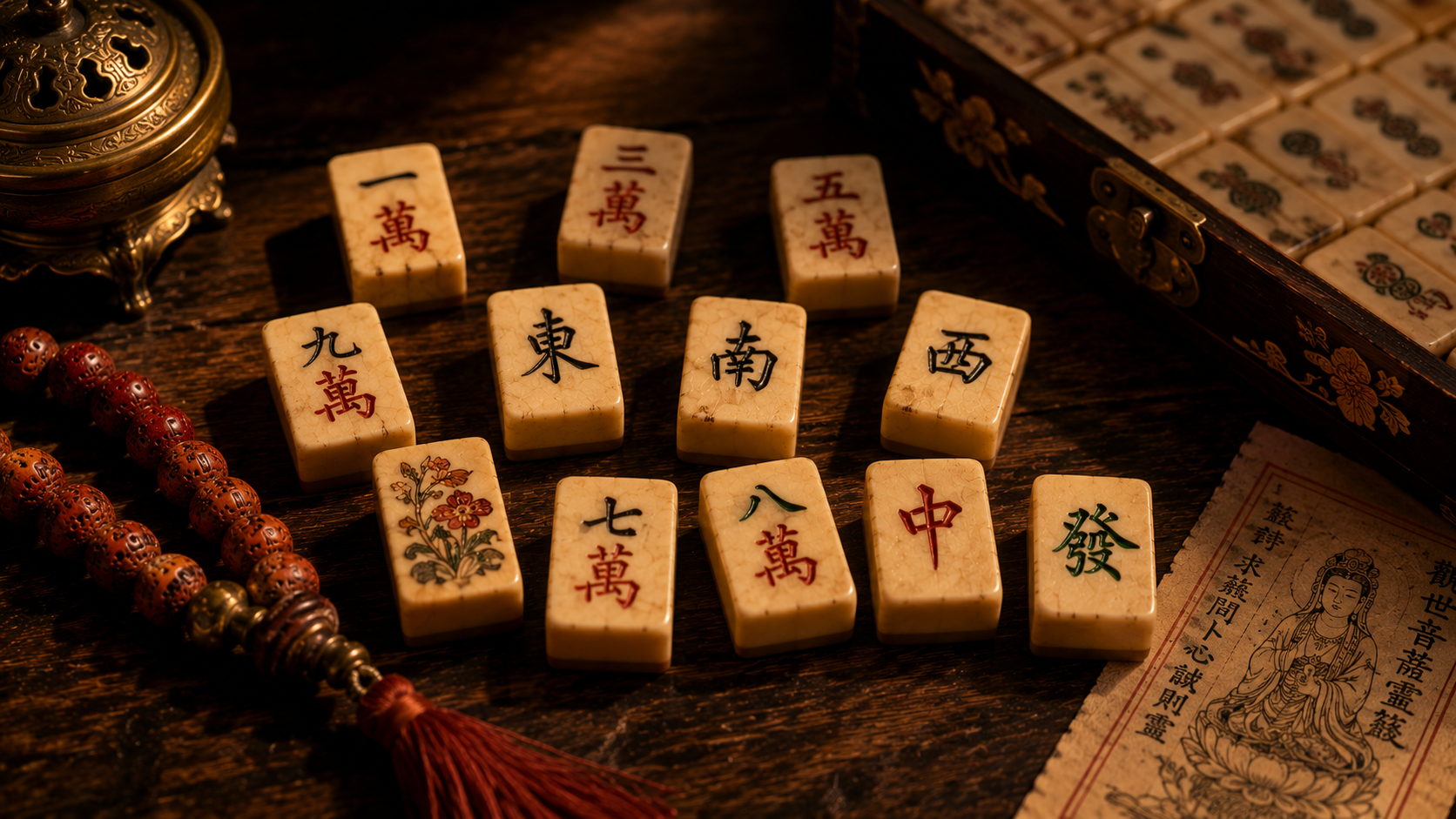
So I had her flip the tiles closest to her, no rearranging, just whatever was there. Mahjong tiles. Same game your grandma plays, also a divinatory tool. The pattern was threes, kept coming back to threes. I told her, you get threes a lot in your life. She said yes, three was her number.
Same pattern through the whole reading. Three ancestresses on her maternal side, mountain people, not ocean. I asked her where her family was from. Mother's side, mountain. Father's side, ocean. So this was all the maternal line. Korean mountain ancestresses, the old ones.
I asked if she got pissed off when she dreamed. Yes. If she woke up in night terrors. Yes. Because they'd been trying to reach her in dreams and she'd been refusing the door she'd asked them to open. And Korean mountain ancestresses don't sugarcoat. Mountains don't either. So this was them being polite.
It was time for the red pill, blue pill moment. The ancestresses don't wait forever, and if you don't show up, they'll move to someone else in the line. They've got better things to do.
She told me she was preparing to start a business. Sound healing. She'd been training for years and didn't feel ready. I told her she was never going to feel ready, that's not how this works. And sound healing was the same work Korean shamans have been doing with drums and chants for thousands of years. Same practice, different language.
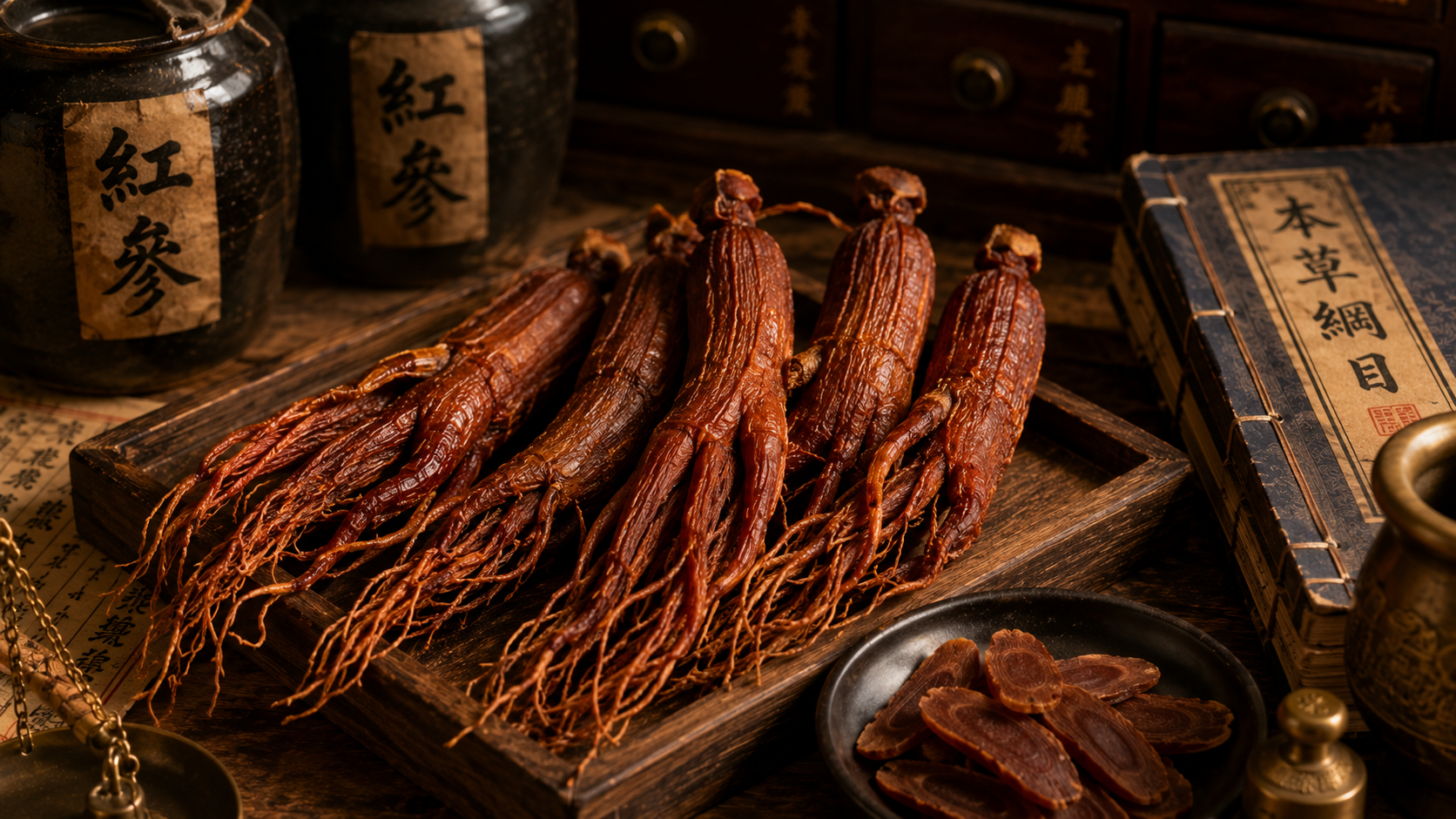
I told her to take a small sip of red ginseng before she practiced. Korean mountain ginseng for a Korean mountain woman. Yang for the strength she'd been refusing.
She left with the reading.
"And what I'd done in that room wasn't fortune-telling. It was diagnosis."
Most readers wouldn't recognize what just happened as Chinese medicine. That's because what they meet as Chinese medicine is the modern standardized version, not the classical tradition.
In Canada, the training is two years for acupuncture, three years for traditional Chinese medicine practitioner. The extra year is herbology: single herbs, classical formulas, decoction preparation.
Either way, you memorize 361 acupoints. They sit on the 12 primary channels plus 2 of the 8 extraordinary vessels (奇经八脉 qí jīng bā mài) that carry their own points: Du Mai and Ren Mai. The other 6 extraordinary vessels don't carry their own points. All 8 extraordinary vessels get basic-level coverage: opening and closing points, pathways, and symptomatology. Acupoints get coded by abbreviation (LI4, ST36, LV3), not by their pinyin names (He Gu, Zu San Li, Tai Chong). Plus 48 extra points (奇穴 qíxué) that sit off-channel. Plus microsystems: auricular, scalp, Korean hand, sometimes facial. The acupoint names carry the meaning. The codes don't.
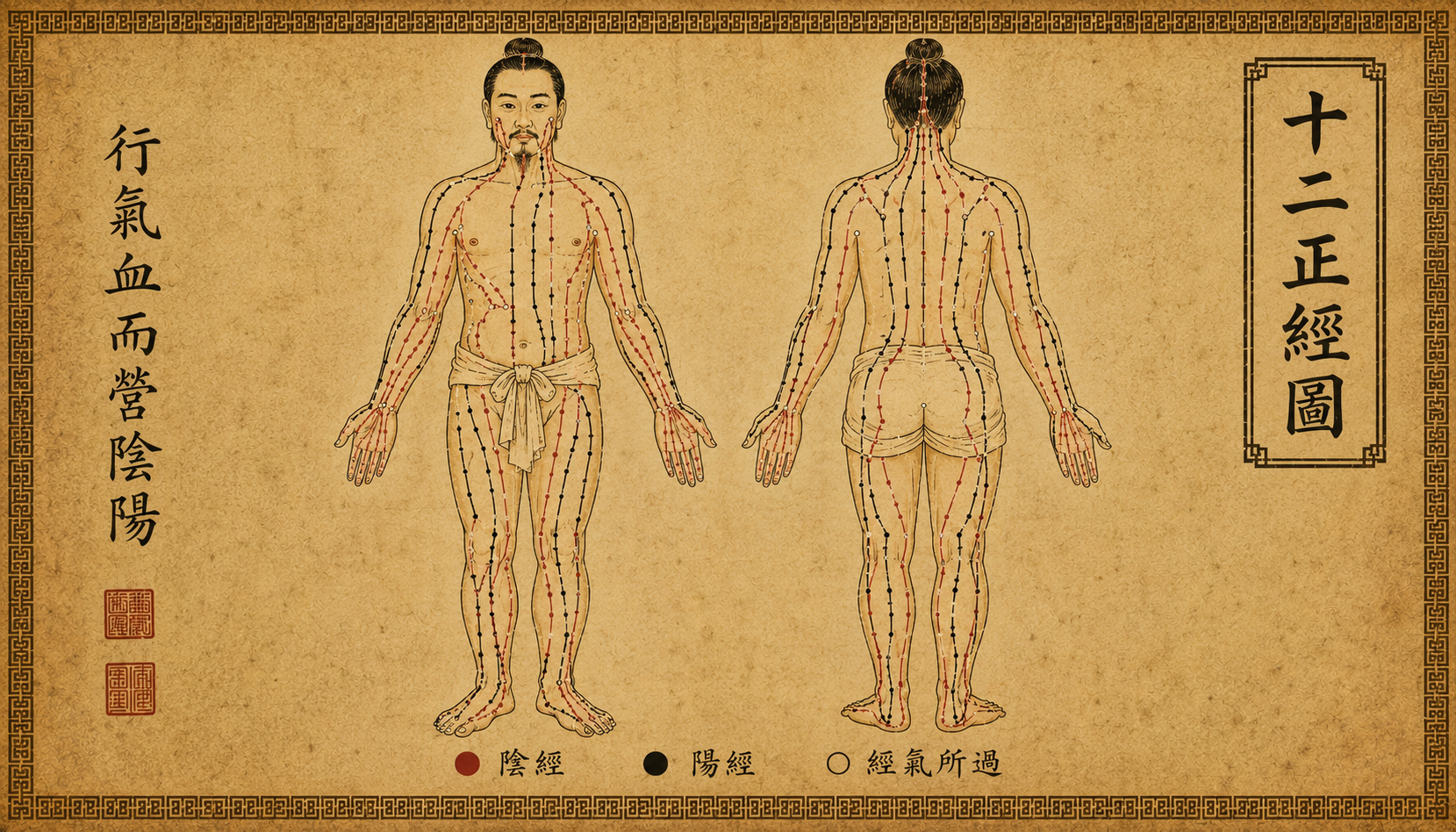
You learn theory and diagnostics: the four examinations (looking, listening, asking, palpation), point location, channel theory, foundations of yin-yang and five phases, zangfu pattern diagnostics, etiology and pathology. You learn clinical subjects: internal medicine, gynecology, pediatrics, dermatology, orthopedics. You learn the modalities: needling techniques, moxibustion, cupping, gua sha, tuina, occasional bone-setting (banfa), TCM food therapy, plus qigong and tai chi (typically Yang style) as physical education. Then you put it together in student clinic. At the schools I've taught at, that's somewhere between 540 and 840 hours treating real patients under supervision before graduation.
Right? That's the curriculum officially. Unofficially, faculty bring lineage material into clinical instruction: Master Tung's points, Dr. Richard Tan's Balance Method, Japanese and Korean acupuncture styles, medical qigong, Wu Yun Liu Qi (五运六气 wǔ yùn liù qì) calendrical acupuncture, bazi diagnostics, family-line technique adjustments, things that aren't in the CTCMPAO syllabus.
The standard intake is the 10 questions formalized by Ming dynasty physician Zhang Jingyue: chills and fever, sweating, head and body, stool and urination, appetite and thirst, chest and abdomen, hearing, sleep, pain, emotions (plus menstruation for women). You also do the biomedical-compatible review: vitals, contraindications, red flags. That part isn't classical, it's added on for the modern clinic. It makes sure you don't kill anybody.
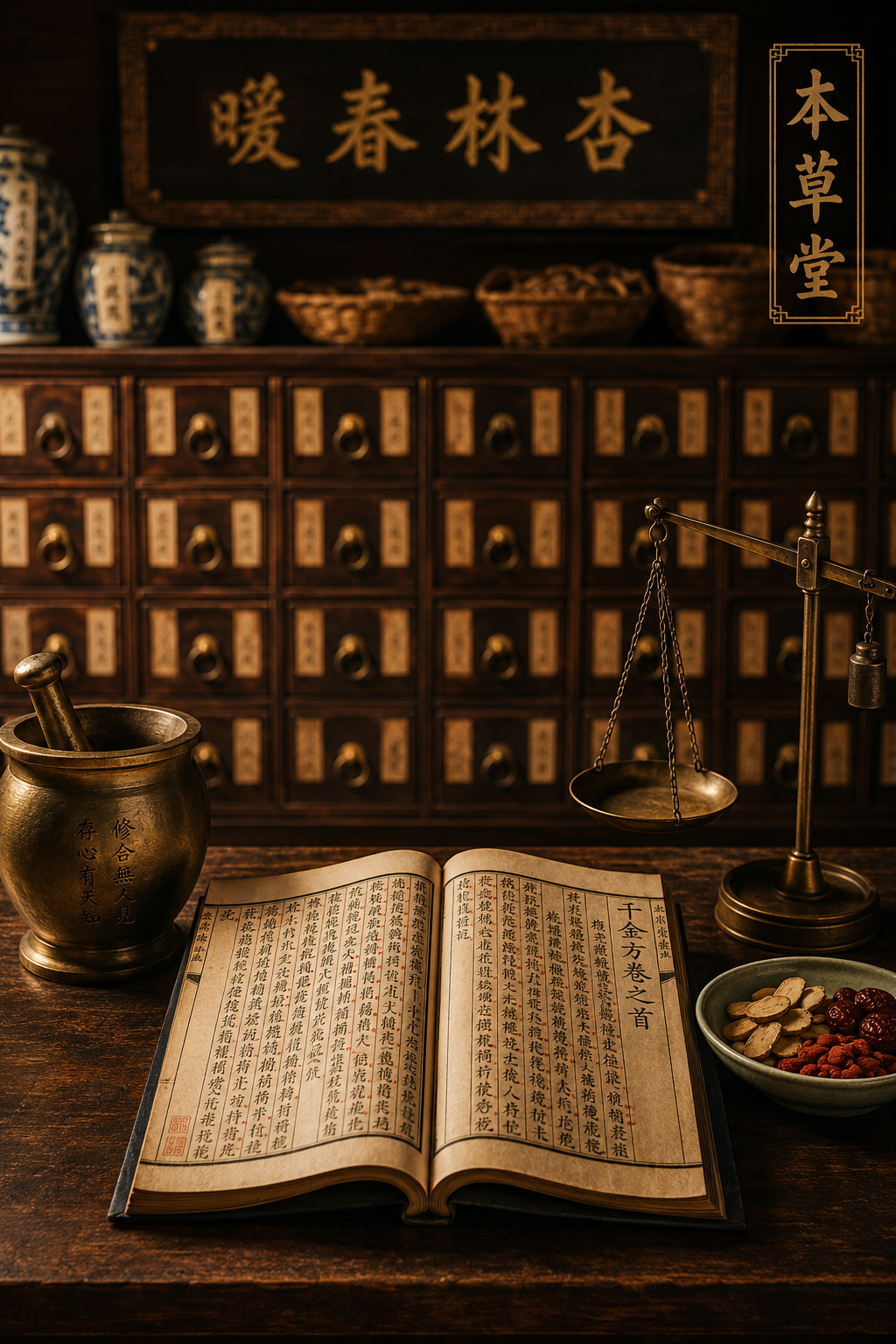
So this isn't how Chinese medicine always looked. The version most people encounter now is the post-war reform. Mid-20th century, the political turn brought a materialist worldview that pushed everything classical out. Daoist ritual, Buddhist ritual, astrology, feng shui, all considered superstition. Texts were lost. Practitioners were silenced. The medicine survived because the new system needed to feed millions of people and couldn't afford to throw out the herbal pharmacy. So the reformers kept what was biomedical-compatible and cut what wasn't. They reformatted it for hospitals and exam boards. That became the modern profession. Familiar enough to register as medicine, exotic enough to file as alternative. Like the panda. Technically a bear, marketed as something else.
The classical material didn't disappear. Practitioners with lineage transmission migrated — to Taiwan, Hong Kong, Singapore, North America, Europe. They kept teaching the older material outside the mainland framework. Rural pockets in Yunnan and Sichuan held onto regional practice. Diaspora communities preserved what the reform stripped. Today a Western-trained practitioner who studies with a real lineage holder often has more access to classical material than a mainland Chinese MD whose training was integrative from the start.
"The only practice that could keep them alive was the classical one they were trying to leave behind."
What got cut had three layers.
First, infrastructure. The cultivation requirement on the practitioner. Classical CM assumes the practitioner is doing their own internal work — qigong, meditation, ritual hygiene, dietary discipline — because the work runs through your body. Some days it's a lot, depending on what the client is going through. A car won't run without gas. Without cultivation, the work doesn't run. The modern curriculum makes cultivation optional. Most students treat it as a side hobby. Then they wonder why their treatments don't land.
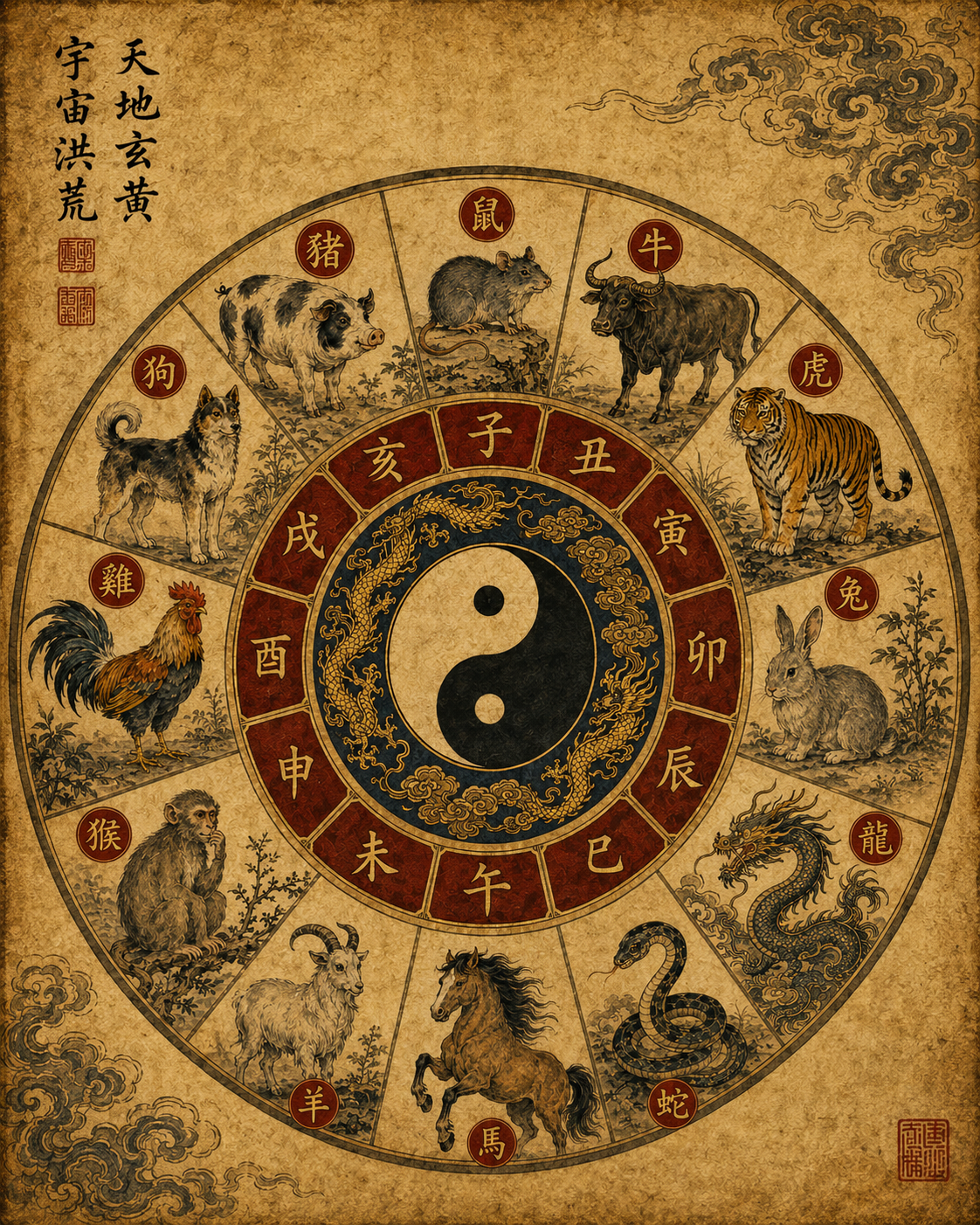
Second, the narrative layer of the medicine. Bai Hu Tang isn't "White Tiger Decoction" as a brand name. It's a direct ritual reference to the mythical White Tiger of the West. Xiaoyao San is the Free and Easy Wanderer from Zhuangzi. Yin Ling Quan, "Yin Mound Spring," is where you put yin pathogenic factors to the grave. The names tell stories. Each channel has its own narrative. The Lung meridian is a priest performing the fengshan rites (封禪 fēng shàn) at the sacred mountain. The points reference that journey, each one carrying function, metaphor, and mythology together. Lung 1 is Zhong Fu, the Central Treasury where the priest gathers offerings before the ascent. Lung 2 is Yun Men, the Cloud Door.
Third, the strategic layer. Acupuncture is the military: tactics, immediate engagement, point-by-point. Herbal medicine is the government: grand strategy, long horizons. Formulas are organized by jun-chen-zuo-shi (君臣佐使) — sovereign, minister, assistant, courier. The formulas are governments of those individuals working together. Guanzi said it: a one-year plan, plant grains. A ten-year plan, plant trees. A lifetime plan, cultivate people.
Lineage and apprenticeship are cheat codes. They don't play the game for you. You still have to put in the hours.
I teach the standardized version. I practice the classical version. The buffet is open, the food is safe, you'll get results, just not the Forbidden Kingdom results.
This book is the rest.
You might think we're about to add a magick layer on top. That's not what's happening. The magick was never added. It was the medicine. The standardized version just hid the part that names it that.
Chinese medicine has a marketing problem. The textbook says 4,000 years old. The practice you actually meet in a Canadian clinic is about 75 years old. The earlier 3,925 years exist, but they live in a different version of the medicine. That version is classical Chinese medicine, and it reads less like a healthcare profession and more like Chinese Harry Potter. The pharmacy has a wand for every wizard, every fix, every fixable thing. The herbalist isn't a supplement-store clerk. The acupuncturist isn't a needler. These are working magickal practitioners. The language is just polite about it.
This is what Edward T. Hall called high-context culture. The meaning sits behind the words.
If you don't tap the table when someone pours your tea, it shows you were raised wrong.
Tap the table with two fingers when someone pours tea. That says thank you AND I'd like more, in one gesture, no words.
So when the language says acupuncturist, hidden inside is exorcist with little swords.
Herbologist, hidden inside is herbal magician working a collective of plants.
Bone setter, hidden inside is the one who works with your ancestors through your skeleton.
Vet, hidden inside is the doctor with the Doolittle intuition for animals.
The big words don't get spoken. Everyone agreed long ago not to say them out loud. A Chinese kid hears go see the herbalist and is hearing go see the herbal magician. Like Latin culture saying I'm going to the Botanica. Same kind of statement.
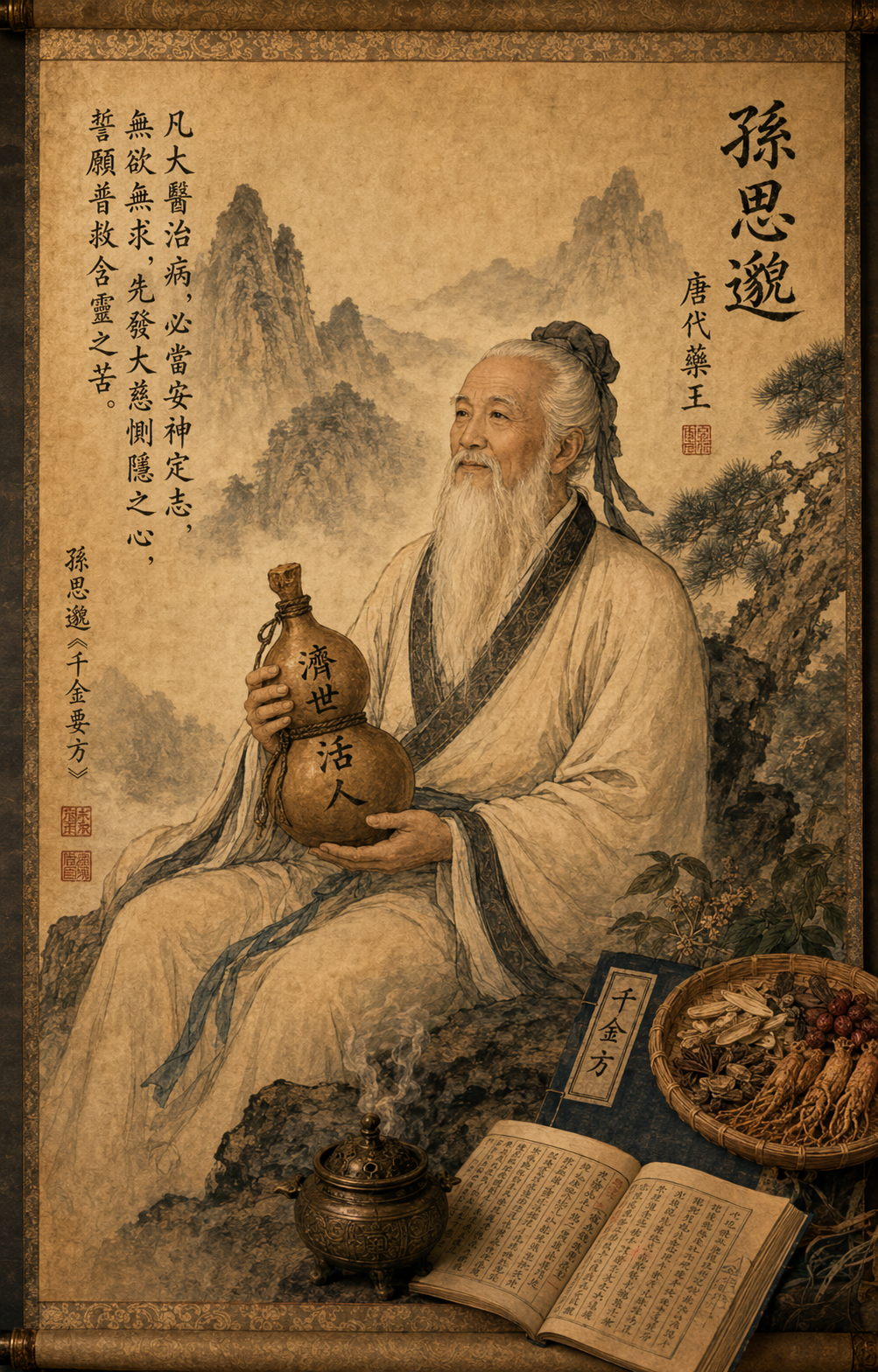
Tang dynasty, Sun Simiao writes treatises. Called the King of Medicine 藥王, he outright breaks the secrets.
In the same paragraph he gives you the dosage, he tells you to call the spirit: visualize the yellow mist, do the mudra, recite the mantra. Liver problem? Look at the rising sun, do the mudra, draw it into your organs.
He gives no craps.
The English translations clean it up because the translators couldn't make heads or tails of these elements, and it's hard to translate culture. Western practitioners read the cleaned text and conclude classical CM was always dry.
It was never dry. Read the Chinese: the vividness is right there on the page.
The diagnosis itself is the magick.
Pulse, tongue, pattern differentiation: that's not a chemistry report, that's closer to art. What you're holding when you write it up is a report card on someone's life.
Shoulder pain is a relationship.
Menstrual issues are self-esteem issues about not being nourished.
Lower back pain is the world being too heavy.
The body is the table, and the table is the universe.
"The diagnostic language IS the magickal language. Not two things."
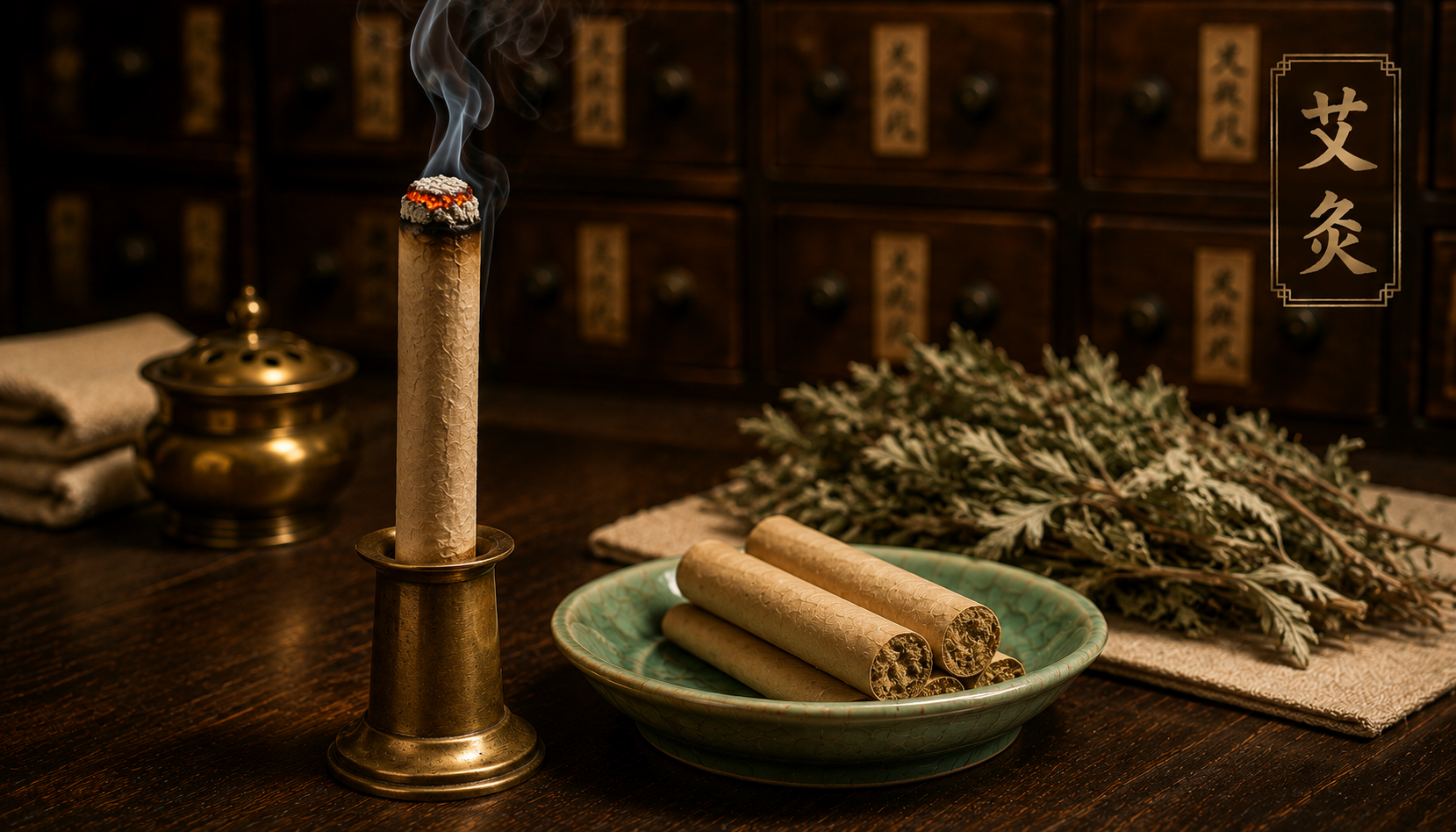
The boring parts of the curriculum are magick too. Wax on, wax off. Karate Kid had it right. Your basics are your basics.
Yin-yang from module one is its own divinatory system. Balance Method is built on it.
Five phases: the generation cycle is a ritual to build something forward, the control cycle is a ritual to restrain or cut.
Seven emotions is a stat check on your zoo. They're embodied; if you don't watch them they run things from the shadows.
Board exam calls all of this theory. It's been working lenses of practical magic for two thousand years. Theoretical because the school can't take you through the immersion. In qigong training you experience it directly.
Mao said publicly he didn't believe in Chinese medicine. The folk record says he kept Daoist priest bodyguards on campaign and used qimen dunjia (奇門遁甲), the war-magic calculation system.
Officially no superstition. Unofficially every move was inside the framework.
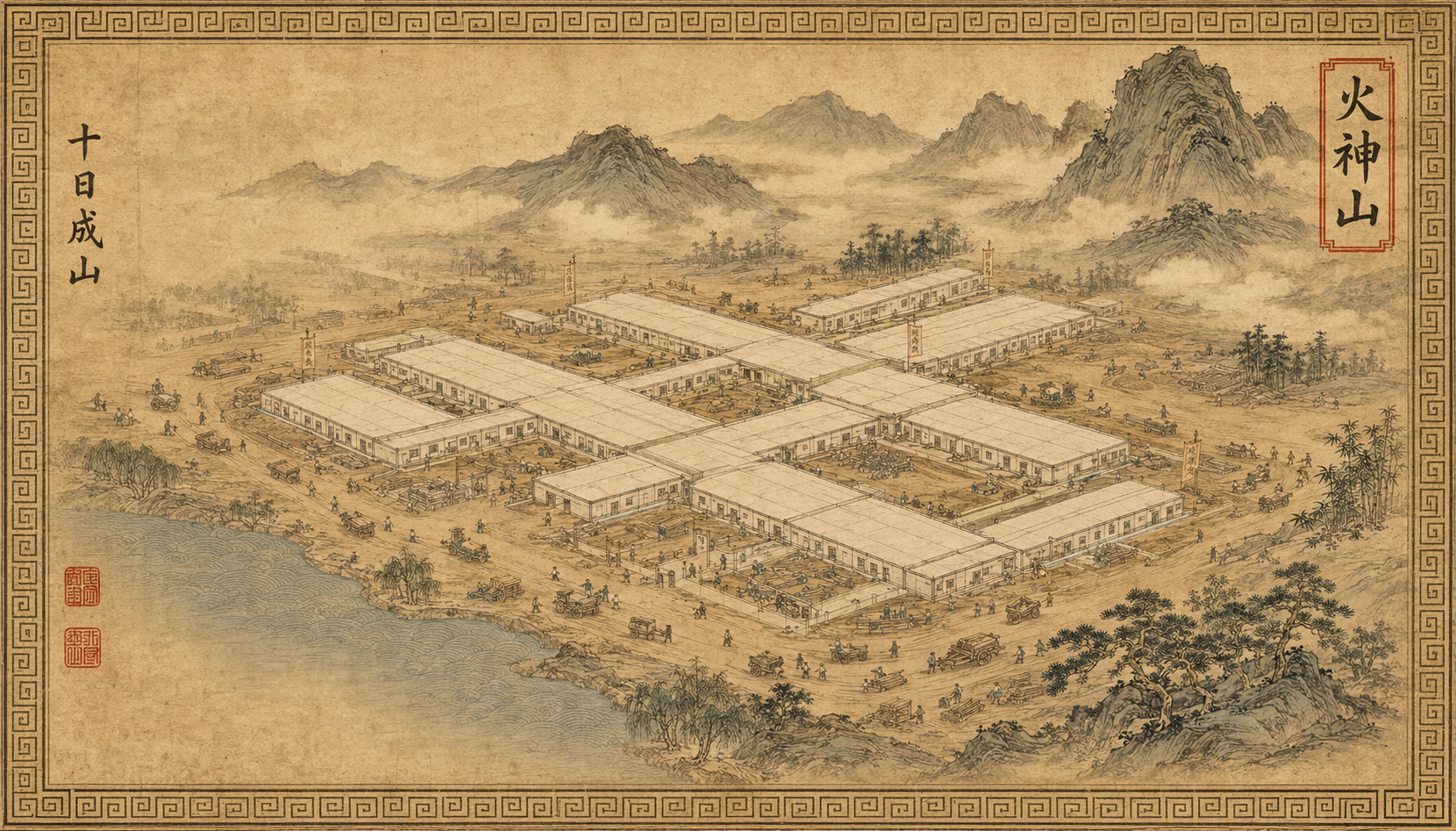
The same split runs through the textbooks now, and it surfaces in the moments that matter. The COVID hospitals built in Wuhan in early 2020 were named Huoshenshan 火神山 (Fire God Mountain) and Leishenshan 雷神山 (Thunder God Mountain): Five Elements names, Daoist deity names. They named the hospitals after the fire god and the thunder god to clear what TCM was reading as a yin pathogen.
State medicine, formally materialist, was naming buildings the old way when the stakes were real.
So when we get to the chapters on bazi diagnostics, ritual intervention, and channel narratives — the procession of figures each meridian carries, the acupoints that describe their journey — don't file any of that under the magick department.
File it under medicine.
Magic and medicine are one; the universe and the body are one. The book view is one map, and there is another.
"They're the same world, looking at you with two eyes. It just depends which side of the face you want to focus on."
Classical Chinese medicine is the pre-1949 tradition that includes herbal pharmacy, acupuncture, moxibustion, divination, ritual intervention, channel narratives, and lineage cultivation as a unified practice. The diagnostic and treatment frameworks are the same ones still in use today — pulse, tongue, pattern differentiation, formulas, point selection — but they sit inside a worldview that includes spirit-level diagnostics, talismans and mantras, calendrical timing, and the practitioner's own internal cultivation as part of the medicine. It's not "TCM plus woo." The ritual and narrative layers were structural, not optional.
Traditional Chinese medicine (TCM) is the standardized, post-1949 reform of the classical tradition. The mid-20th-century political turn in mainland China pushed the materialist worldview, classifying Daoist ritual, Buddhist ritual, astrology, and feng shui as superstition. The reformers kept what was biomedical-compatible (herbs, acupuncture points, basic theory, clinical modalities) and reformatted it for hospitals and exam boards. Classical lineage, ritual work, divination as diagnostic tool, and the cultivation requirement on the practitioner mostly got cut. TCM is the version most North Americans encounter through regulated clinics. Classical CM is what survived in diaspora, in Taiwan, in rural Yunnan and Sichuan, and through individual lineage holders.
Classical Chinese medicine has roots going back at least 2,500 years, with the Huangdi Neijing (Yellow Emperor's Inner Classic) compiled by approximately 200 BCE and source material dating earlier. The "4,000 years" figure is folkloric rather than precise. What matters: the version of Chinese medicine licensed and taught in most schools today is the modern post-1949 standardization, about 75 years old. Classical Chinese medicine and traditional Chinese medicine share roots but are functionally different practices with different worldviews.
Yes, but you have to look for it specifically. Many practitioners trained in TCM also study classical material through lineage apprenticeships outside the standardized curriculum. Classical Chinese medicine is taught at certain Western schools, in Taiwanese practice, and through individual lineage holders worldwide. A Western-trained practitioner who studies with a real lineage holder often has more access to classical material than a mainland Chinese MD whose training was integrative from the start. When choosing a practitioner, ask about their lineage training, not just their licensure.
How the four examinations work as a divinatory system. Why the body can't lie like the mouth can. What the practitioner actually reads when they take your pulse, looks at your tongue, and asks you ten questions.
Zachary Lui is a Registered Acupuncturist (R.Ac), Master of Medical Qigong, and Mao Shan Shangqing (茅山上清) Daoist lineage holder based in Toronto, with active practice across Wu (巫) and Chinese Esoteric Buddhist (唐密) frameworks. He trained at the Ontario College of Traditional Chinese Medicine and at IIMQ Canada under Robert Youngs, and apprentices in magick with Andrieh Vitimus, his sifu. Faculty at three CTCMPAO-accredited schools, returning board director at Traditional Chinese Medicine Ontario (TCMO), and co-host of Deeper Down the Rabbit Hole.