Acupuncture in Riverdale Toronto | Zachary Lui, R.Ac
Registered acupuncture care with Zachary Lui, R.Ac, at Wuji Xuan Life Wellness in Riverdale, Toronto.
Registered acupuncture care with Zachary Lui, R.Ac, at Wuji Xuan Life Wellness in Riverdale, Toronto.
Registered acupuncture care at Wuji Xuan Life Wellness in Riverdale, Toronto. First visits welcome. Returning patients can book straight through Jane.
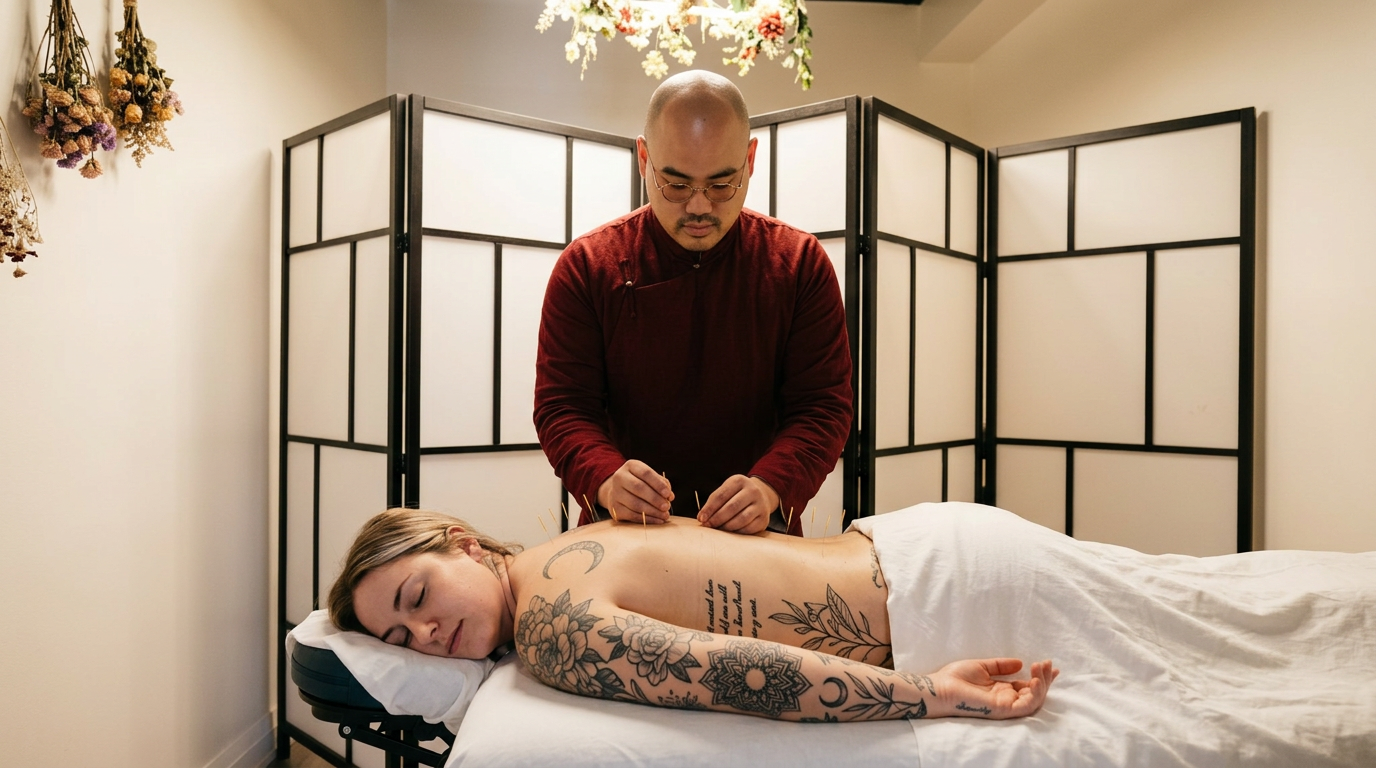
A regulated health profession in Ontario under the Traditional Chinese Medicine Act, 2006. Treatment involves fine, single-use, sterile needles placed at specific points on the body, chosen based on a TCM pattern assessment. Adjunctive techniques where clinically indicated may include cupping, gua sha, tuina, moxibustion, and qigong therapy.
People come in with things like pain, sleep concerns, digestive complaints, stress-related symptoms, cycle questions, and support through perimenopause. Some come in for general wellness and preventive care. Every patient responds individually. Outcomes are not guaranteed, and the treatment plan is discussed at intake so you know what we're actually working toward.
Sixty minutes. Expect:
Questions are welcome at any point. If something doesn't make sense, ask.
Most people feel relaxed, sometimes sleepy, sometimes just quieter in the head than they came in with. Some people feel more energetic. A few feel nothing different for a day or two and then notice a shift. All of these are normal. Drink water, eat a proper meal, don't book a punishing workout for the rest of the day if you can help it.
Formal TCM training through the Ontario College of Traditional Chinese Medicine. Continuing study beyond the core curriculum in classical Chinese medicine: the historical clinical traditions passed down through family-transmitted practice, the medical lineages that served the imperial courts, and advanced needling technique studied with the late Professor Jin Zhang, a UNESCO-recognized representative of the Traditional Chinese Acupuncture Intangible Cultural Heritage of Humanity.
The approach is classical Chinese medicine, grounded in the traditional pattern-differentiation method and informed by the older transmission lineages that sit behind the modern TCM curriculum.
See the services page for current rates. Receipts are issued in the name of the Registered Acupuncturist and are accepted by many Ontario extended health plans. Confirm with your insurer before booking.
Zachary Lui is a Registered Acupuncturist (R.Ac) in Ontario. Former Director of Marketing on the board of Traditional Chinese Medicine Ontario (TCMO), the professional association representing Registered Acupuncturists and Traditional Chinese Medicine Practitioners in the province. Helped lead the 2022 coalition that preserved Ontario's regulatory framework for TCM through amendments to Bill 88.
Online through Jane, or by phone at 416-595-5525.